Full Sanding Versus Screen and Recoat
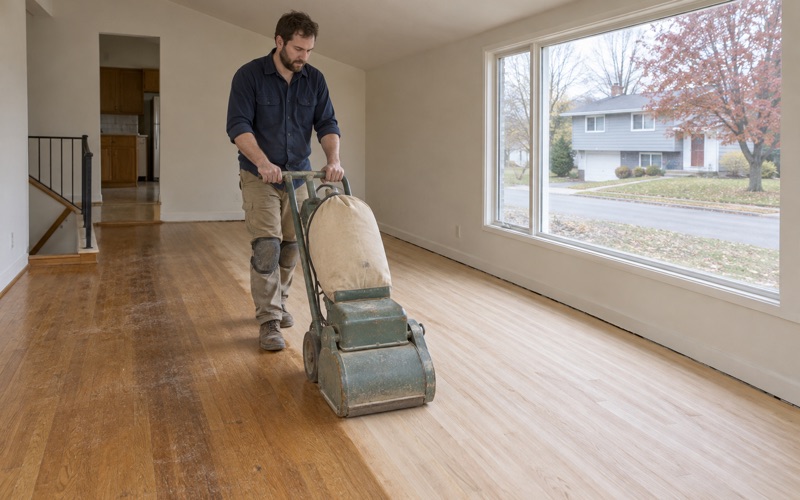
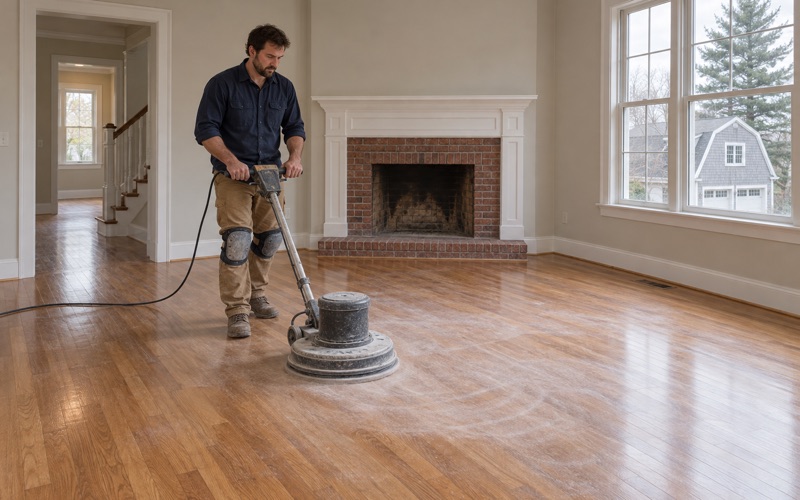
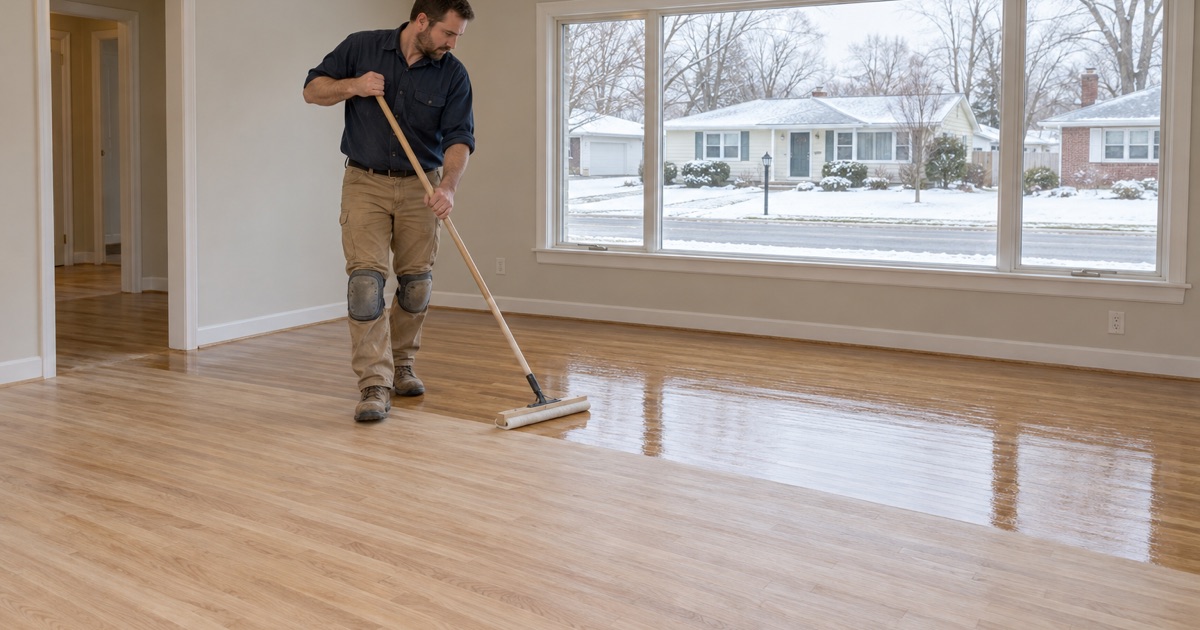
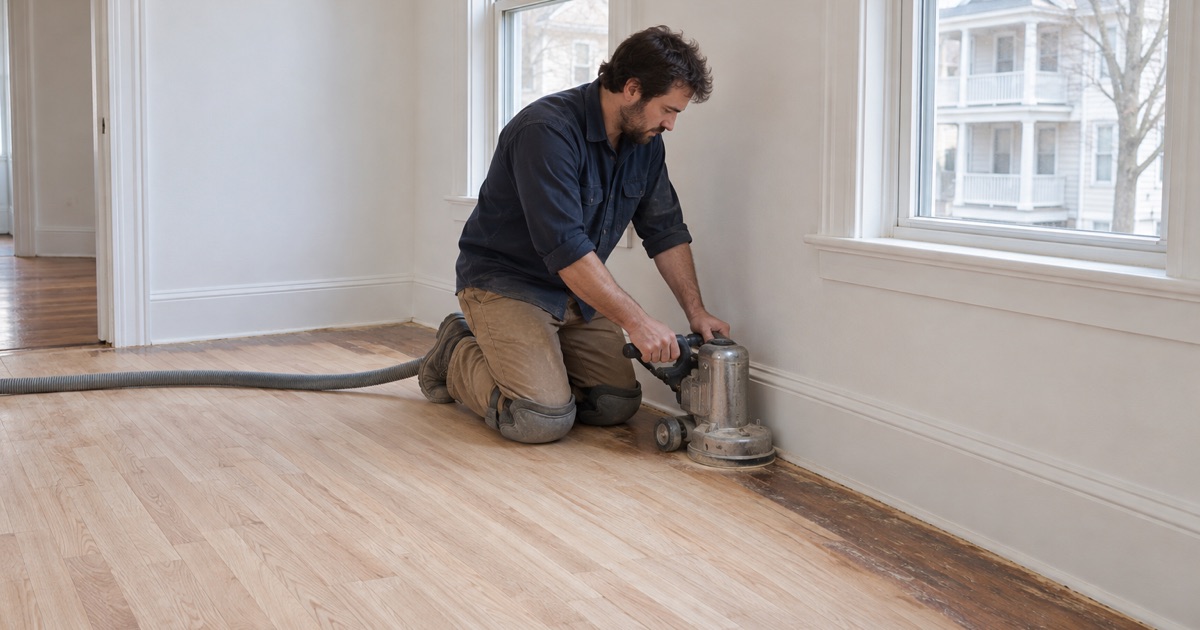
A full sanding takes the floor to bare wood and removes scratches, stains and old color. A screen and recoat only scuffs the existing finish and adds a fresh coat. We look at how deep the wear goes and tell you which one the floor actually needs, which is often the cheaper option.
Updating Orange and Yellowed Oak
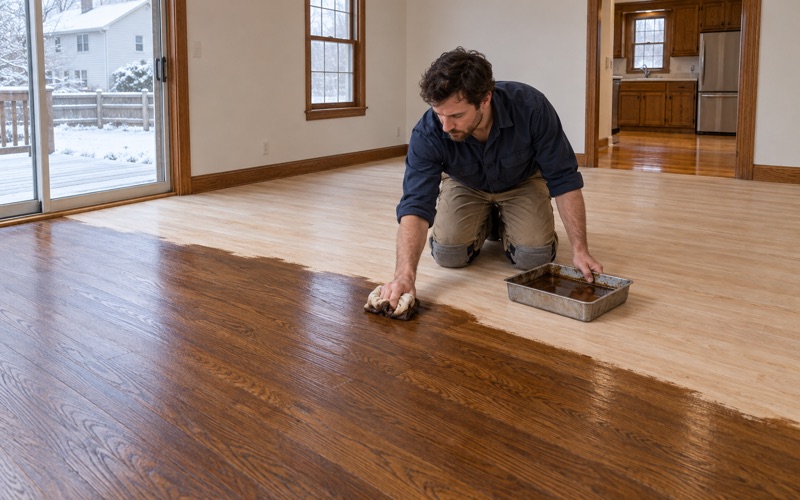
Orange oak usually comes from an oil-based finish that ambered over time on red oak. Sanding to bare wood and choosing a new stain or a clear waterborne finish takes it to a natural or modern tone. We put stain samples on your actual floor first, because the same stain looks different on red oak than on a chart.
Oak Under Wall-to-Wall Carpet
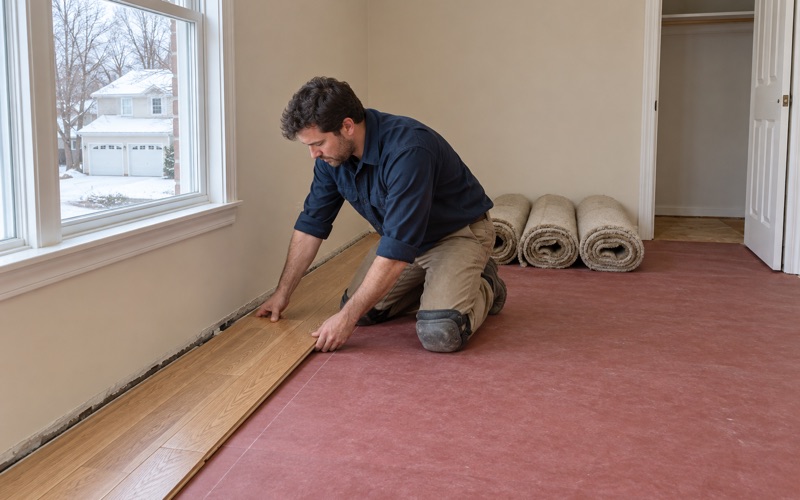
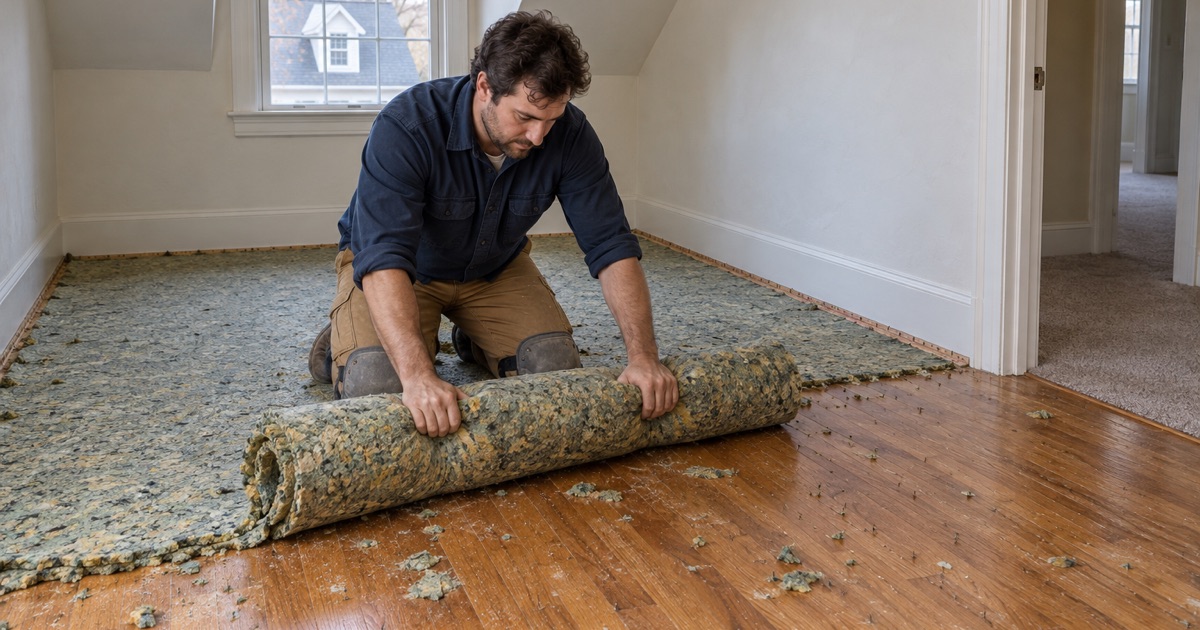
Many houses built from the 1950s to the 1970s have oak strip flooring under the carpet, often in good shape. We pull a corner at a closet or vent to check before you commit. Once the carpet is out, the oak can usually be sanded and finished for far less than new flooring.
Removing Carpet Pad and Tack Strip
Old carpet pad can glue itself to the wood, and every room has carpet staples and tack-strip holes around the edges. We scrape the pad, pull every staple and fill the holes before sanding starts, not after. Staples left in the floor tear sanding paper and gouge the wood.
Refinishing Mid-Century Oak Strip Floors
The narrow red oak strip floors in ranches and capes from the 1950s and 1960s were built to be sanded several times. We check how much wood remains above the tongue before sanding, use a gentle grit sequence, and finish to the color you choose. Handled carefully, these floors have decades of life left.
Dust Control During Sanding
Our sanders run with HEPA vacuum collection, which captures most dust at the drum and edger before it spreads. We seal doorways and returns in the rooms being worked. Most families can stay home during sanding if another route through the house exists, though finish days need the rooms left empty.
Fixing a Blotchy Stain or Peeling Recoat
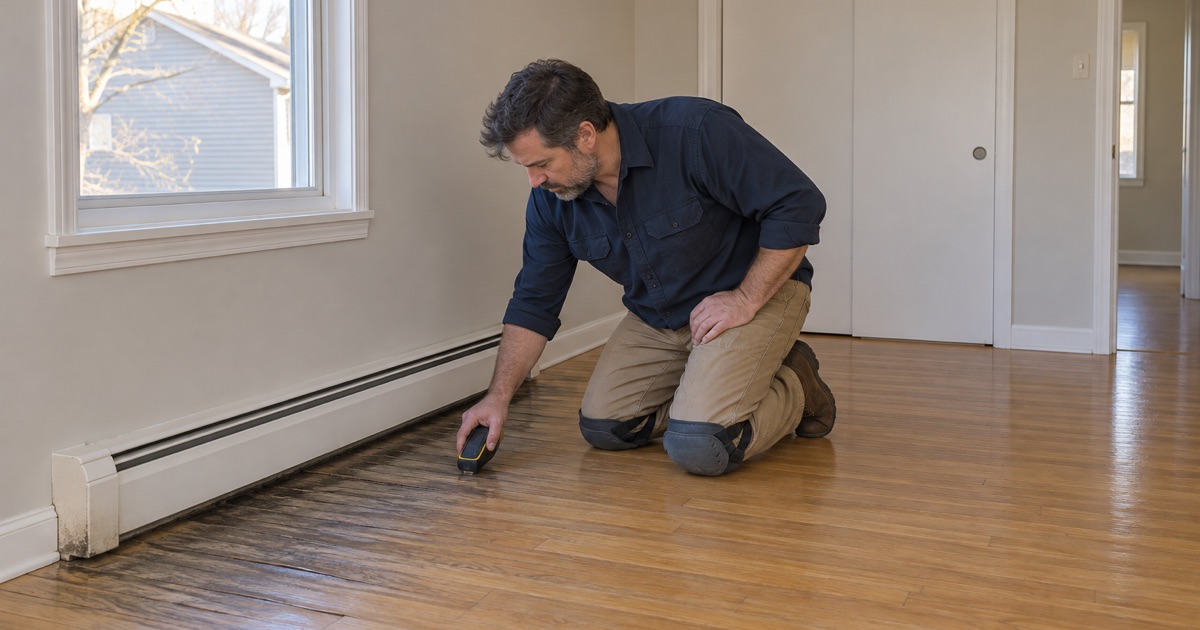
Stain goes blotchy on maple and on poorly sanded oak, and a recoat peels when it goes over a floor cleaner or wax that was never removed. We diagnose the cause, then sand back to bare wood where necessary. Recoating over the problem only locks it in.
Refinishing Stairs Tread by Tread
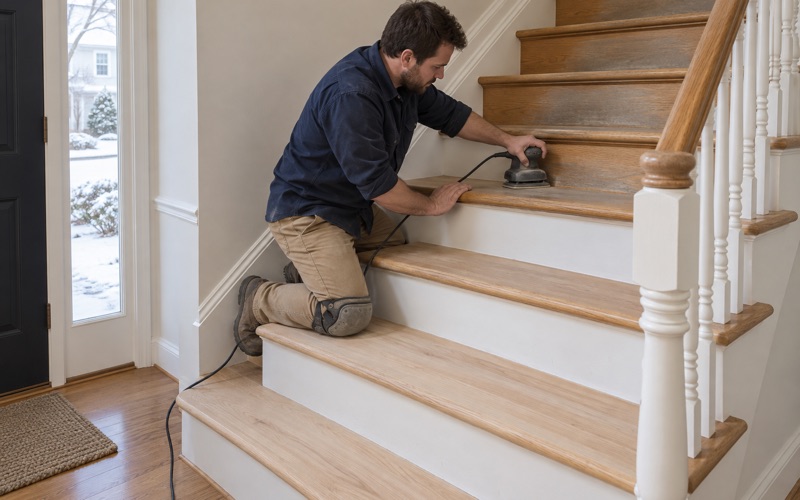
Stairs are sanded by hand and with small sanders, one tread and nosing at a time, since a big machine cannot reach them. Painted risers get their own lead check in older houses. Matching the stair color to the refinished floor is part of the job, not an extra.
Refinishing Before a Home Sale
Refinished hardwood photographs well and buyers notice it in listings. We schedule around your listing date, usually recommending a clear or light natural finish that suits most buyers. A sale-prep refinish is often the best return among small projects before listing a house.
When Engineered Floors Can Be Sanded
Engineered hardwood has a top layer of real wood over a plywood core, and that engineered wear layer is all there is to sand. We measure it before promising anything. A thick wear layer can take a full sanding, while a thin one may only take a screen and recoat.