
Framingham Wood Flooring repairs hardwood floor water damage in Framingham, MA, serving surrounding cities including Cochituate, Marlborough, Hopkinton, Wellesley and Maynard. With more than 20 years on wood floors, we trace where the water came from, dry the floor and measure it with a moisture meter, document the damage for your insurance adjuster, and then repair or replace only what actually needs it.
Water and wood floors are a bad mix, but a wet floor is not always a lost floor. How much can be saved depends on how long the wood stayed wet, what kind of flooring it is, and how quickly drying started. The biggest mistakes happen when people rush: sanding a floor that is still wet, or tearing out boards that would have settled on their own.
Our approach is to measure before we decide. Moisture readings across the floor and subfloor show how far the water spread and when the floor has dried enough to repair. That same record helps your insurer understand the loss and pay for the right scope of work.
Where the Water Comes From
Dishwasher and Ice Maker Line Leaks
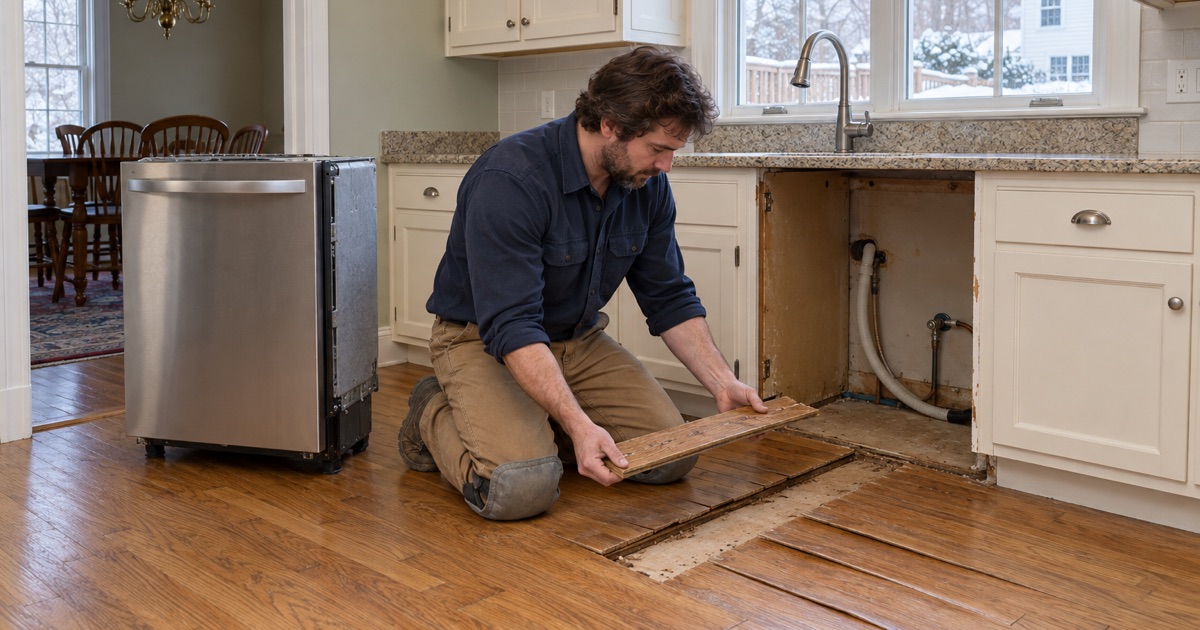
Kitchen leaks are the most common water damage we see under wood floors. A cracked dishwasher supply line, a failed drain hose or a leaking ice maker line behind the refrigerator can drip for weeks before the boards cup enough to notice.
We pull the appliance, find the leak, and map the moisture from there. The damage almost always extends beyond the visible stain, often under cabinets and into the next room.
Hot-Water Baseboard and Radiator Pipes
Many older houses here heat with hot-water baseboard or radiators, and a weeping joint or corroded pipe can soak the flooring along an exterior wall. The damage usually shows as darkened, cupped boards in a line beside the heater.
The plumbing has to be repaired first. We then dry and test the area and replace the damaged boards along the wall, weaving them into the existing floor.
Basement Water and Sump Pump Failures
Finished basements take on water from heavy rain, snowmelt, a failed sump pump or a backed-up drain. Wood and wood-look floors on those slabs can be soaked from below and above at the same time.
We measure the slab and the flooring before recommending anything. If water is likely to return, we will tell you, and suggest fixing the drainage or waterproofing before a new floor goes down.
Hidden Leaks Under Slab Floors
Many ranches here sit on concrete slabs, some with heating pipes cast into the concrete. A leak in a pipe under the slab can show up as a warm patch, a damp spot or boards lifting in one area with no obvious source above.
Those leaks need a plumber to locate and repair before any flooring work. Once the slab has dried and tested within the flooring manufacturer’s limits, we replace the damaged flooring with a product suited to the slab.
Drying and Moisture Testing
The First Hours After a Leak
The first steps matter most: stop the water, remove standing water and wet rugs, and start moving air. Take photos before anything is cleaned up, since they help with any insurance claim.
If a large area is soaked, a water mitigation company with dehumidifiers and air movers can speed drying. We work alongside them or step in once the drying is done.
Mapping Moisture With a Meter
We take moisture meter readings across the floor in a grid, including rooms that look dry, and compare them with readings from an unaffected area of the same floor. That shows exactly how far the water reached.
We record those readings with the date, so there is a clear record of how wet the floor was and how it dried. It is the most useful evidence an adjuster can have.
Waiting for the Floor to Settle
Wood dries slowly, especially when the subfloor underneath is still wet. Mild cupping often flattens considerably as the moisture evens out over the following weeks.
We return to take new readings and decide on the repair only once the numbers have stabilized. That patience can be the difference between a refinish and a full replacement.
Deciding Between Repair and Replacement
When Cupped Boards Can Stay
If the boards flatten after drying and the tongue and groove joints are intact, the floor can usually be sanded and refinished to remove any remaining unevenness and water stains.
That is often the least expensive outcome, and it keeps the original wood in place. We confirm that the moisture has fully settled before we sand.
Crowning From Sanding Too Soon
Crowning happens when a cupped floor is sanded flat while still wet. Once it dries, the board edges shrink lower than the centers, leaving a permanent hump in each board.
We see this often on floors repaired in a hurry. The fix is usually replacement, which is exactly why we wait for the readings before any sanding.
Buckling and Delaminated Boards
Buckled boards that have lifted off the subfloor, and engineered boards whose wear layer has separated from the core, will not recover. Those need to come out. We remove them, inspect the subfloor underneath for damage and mold, and replace any weakened subfloor before new boards go in.
Insurance Documentation
Room-by-Room Records for the Adjuster
We document each affected room with photos, moisture readings, the flooring species and dimensions, and a written scope of repair. Adjusters can see exactly what was damaged and why the proposed work is needed.
That record also protects you if the claim is disputed. A clear, dated set of readings is far more persuasive than a description after the fact.
Sudden Leaks Versus Long-Term Seepage
Many homeowner policies treat a sudden burst pipe differently from a slow leak that went on for months. Your policy and adjuster decide what is covered, not us. What we can do is describe the damage accurately, including how long it appears to have been wet, so the insurer has what it needs to decide.
Condo Units and Water From Above
In a condo, water from the unit above raises questions about who is responsible. The answer depends on the condo documents, the master policy and each owner’s coverage, and Massachusetts condo law lets associations assess certain costs to a unit owner. We document the damage to your floor clearly so the association and insurers can work it out, and we repair once responsibility is settled.
Rebuilding the Floor
Replacing and Weaving In Boards
Damaged boards are cut out and replaced with matching species, width and grade, woven into the existing floor so there is no straight patch line. The new boards are fastened and glued to sit flush.
On older floors we look for matching wood in closets or under cabinets that are being replaced, since reclaimed boards from the same house match color and wear better than anything new.
Subfloor Repairs
Where the subfloor has swollen, delaminated or stayed wet too long, we cut out and replace those sections before the new flooring goes down. A new floor on a damaged subfloor will fail again.
We also check the subfloor for mold and odor once it is exposed. If there is any, it is dealt with before anything is closed up, so the problem is not sealed under a new floor.
Refinishing to Blend the Repair
On site-finished floors, we sand and finish the repaired area together with the surrounding floor so the color and sheen match. Where the floor runs through several rooms, we discuss how far the refinish should extend.
For prefinished floors, we source the same product where it is still made. If it has been discontinued, we find the closest match and place new boards where the difference is least visible.
- 20+ Years on Wood Floors
- Free Written Estimates
- Lead-Safe Work Practices